Working Together
Who Is Actually On Your Shoot
Ask how many people between you and the camera are being paid to attend meetings about the camera.

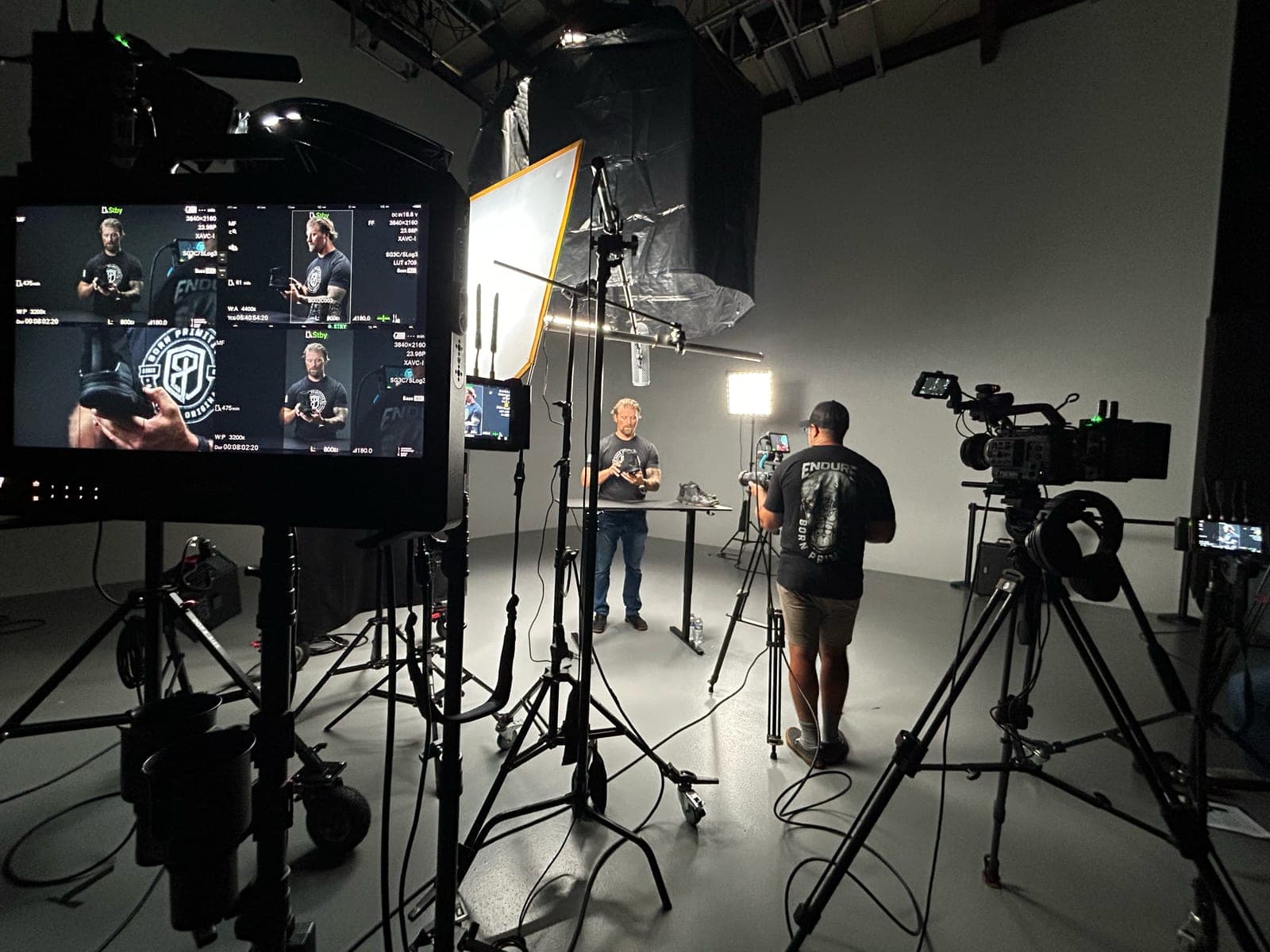
There is a specific kind of expensive that has nothing to do with production value. It shows up as a long chain of people between the person who understands the business problem and the person operating the camera, each of whom has to be briefed by the last.
Every layer in that chain is a place where the intent gets slightly reworded. None of the rewordings are wrong. By the end, the thing being shot is a reasonable interpretation of a reasonable interpretation, and nobody can point to where it stopped being the idea that was sold.
The diligence question worth asking
When you are choosing who makes something, the useful question is not about reel quality or day rates. It is this: of the people on this project, how many will be on set, and will the person I am talking to right now be one of them?
The people who sold you the idea should be the people who make it. Everything else is a handoff, and handoffs are where ideas go to get reasonable.
What a smaller chain changes
It is not mainly about cost, though the cost is real. It is about what happens when something goes wrong at nine in the morning on a location you cannot control:
- A decision that would need a call gets made in the room, by someone who was there when the strategy was set.
- Feedback goes to the person who can act on it, in one step.
- The weather changes and the plan changes with it, without a new round of approvals.
- Nobody has to reconstruct the original intent, because its author is standing there.
This is not an argument that big teams cannot make good work. They obviously can, and for genuinely large campaigns the structure earns its keep. It is an argument that most projects are not that large, and are quietly paying for a structure built for one that is.
The trade you are making
A smaller chain means fewer people to absorb a crisis and less redundancy if someone is unavailable. That is a genuine trade and worth naming rather than glossing. What you get for it is that the film that arrives is recognisably the film that was described, which turns out to be rarer than it should be.
This is the thinking behind The Flagship Campaign.