Distribution
The Car In The Garage
Most campaigns do not fail during the shoot. They fail in the four weeks after it, when nobody owns the job of putting the work anywhere.
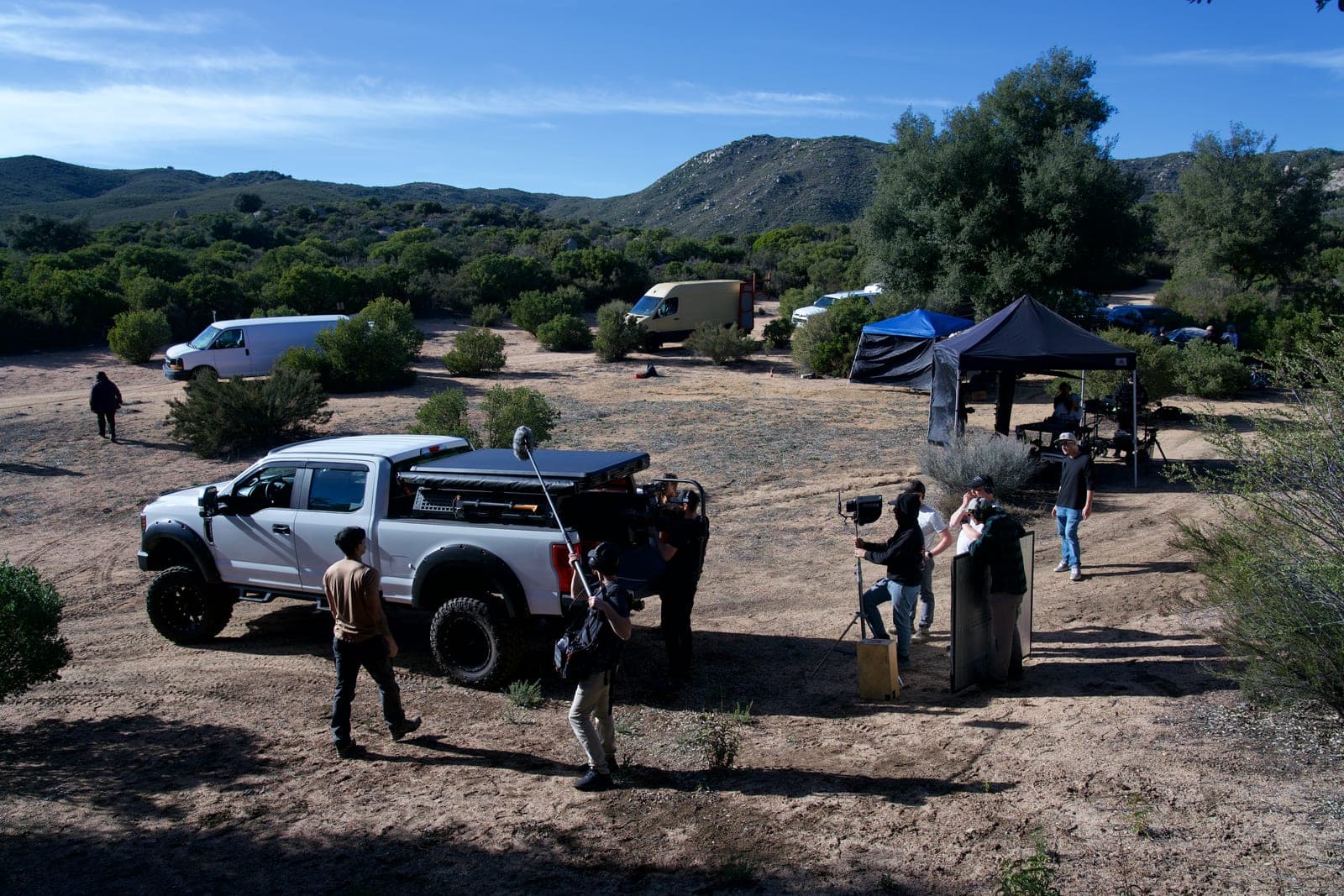
A brand spends six figures on a film. The shoot goes well. The edit comes back beautiful, everyone signs off, and the master lands in a folder. Then the campaign quietly ends, because the part nobody scoped was the part that makes it a campaign.
It is a car sitting in a garage with no gas in it. The most expensive thing you own, and it never leaves the driveway.
This is the most common failure we are called in to fix, and it is almost never a production problem. The footage is good. The film is good. What is missing is that no one decided, before the cameras went up, where this was going to run and what it had to become to run there.
Why it happens to good teams
Production and distribution are usually bought from different people at different times. An agency scopes the film. A social team inherits it. By the time the master arrives, the people who will actually publish it are seeing the material for the first time, and they are being handed a single sixteen-by-nine cut of a story that was never designed to be broken up.
So they do the only thing available. They crop it to vertical, post it once, and move on. The film that was supposed to carry a year of marketing carries a week of it.
What to decide before the shoot
The fix is unglamorous and it is entirely front-loaded. Before a call sheet exists, four things should already be settled:
- Every channel the work has to live on, named. Not "social", but the specific placements and their specific aspect ratios.
- Which moments in the story survive being pulled out of it and still make sense alone.
- Who publishes, on what schedule, for how long after delivery.
- What the film has to do that a still or a caption could not do instead.
That last one is the honest test. If the answer is thin, the budget is better spent elsewhere, and we would rather say so before the shoot than hand over a beautiful film with nowhere to go.
What this changes on set
More than you would expect. A story built to be cut apart is blocked differently, covered differently, and lit so that a vertical crop is a real frame rather than a salvage job. The hero film and the ninety pieces underneath it come out of the same week because the week was planned for both.
None of this makes the film less ambitious. It makes it the asset it was already being paid for.
This is the thinking behind The Flagship Campaign.